Why One-Size-Fits-All LED Wall Washers Fail in Real Projects
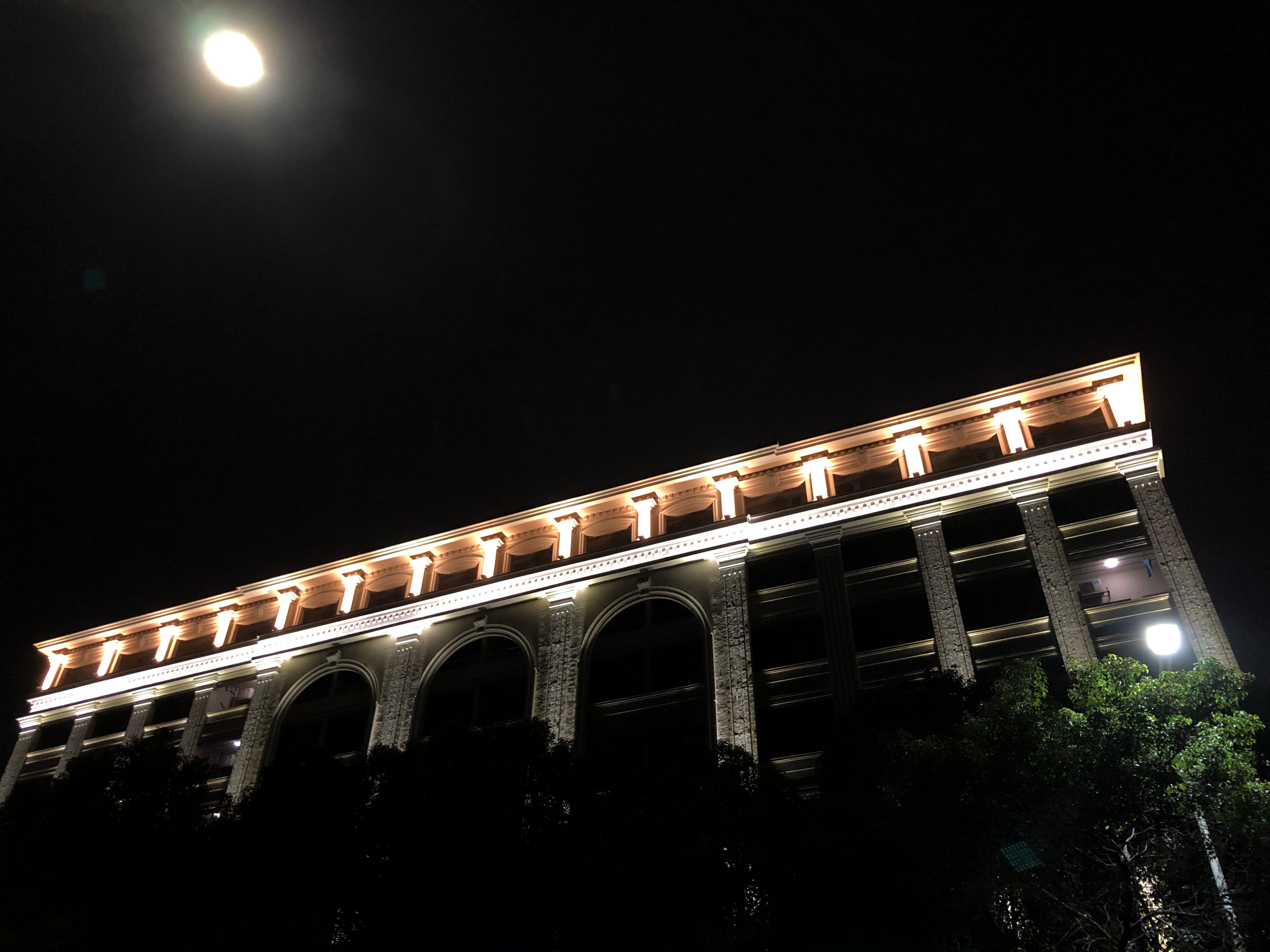
You can spec a lighting system down to the last lumen and still get a disappointing result after installation. I’ve watched it happen: a newly completed hotel whose facade reads as patchy because a handful of low-cost fixtures were chosen to save budget. On paper the spec looked decent—high wattage, an IP rating checked off—yet under real conditions the installation failed to hold up. Failure is rarely a single point; it’s a chain reaction: poor thermal design, inadequate optics, wrong mounting distance, crowded spacing, and insufficient environmental protection. Those elements combine until the light no longer reads the architecture the way it was intended.
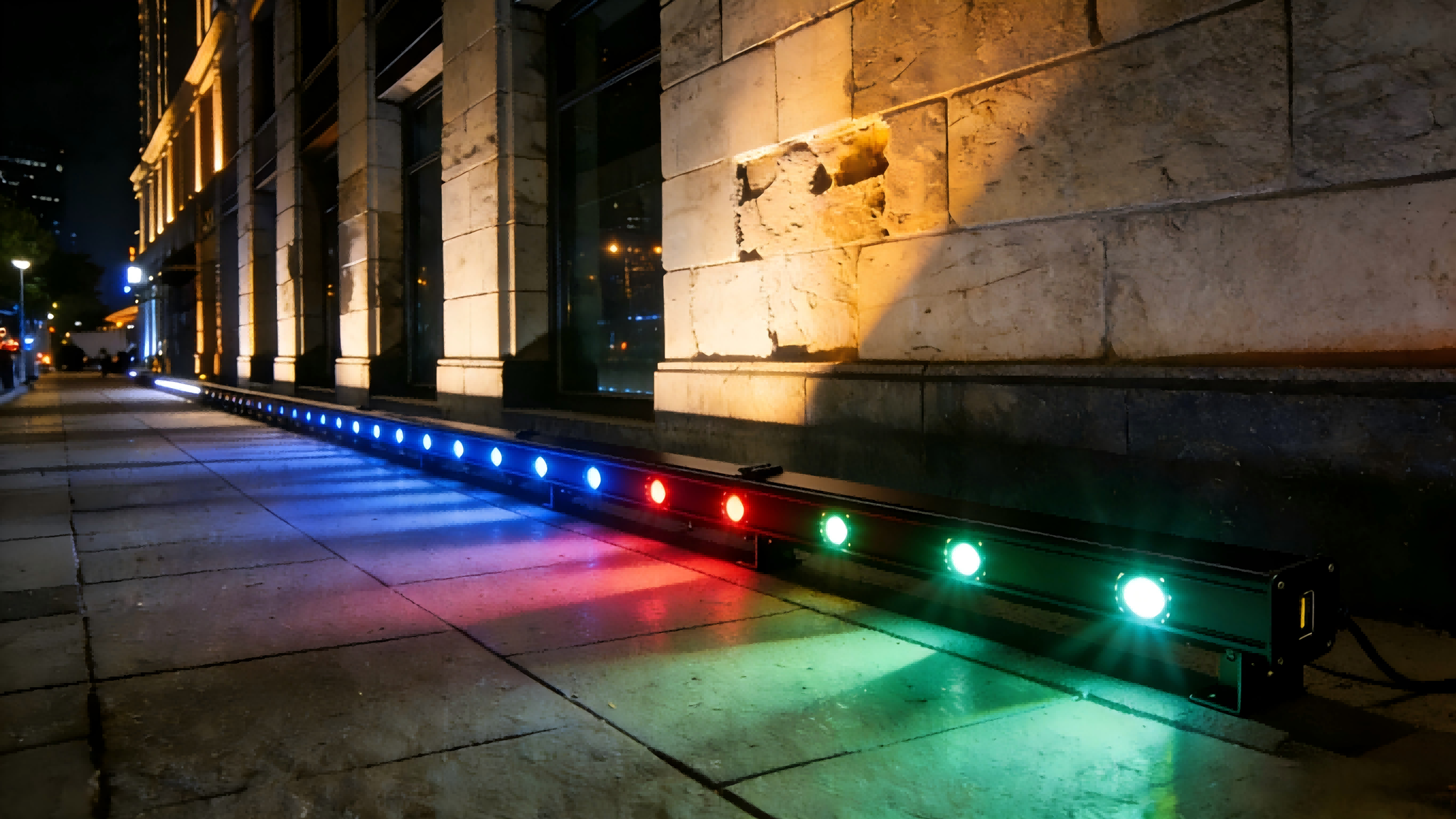
This is not an academic complaint. Buildings differ in material, scale and exposure. Salt-laden coastal air corrodes faster than inland urban pollution. A rough limestone surface will respond to grazing light much differently than brushed stainless. Treating wall washers as interchangeable parts is the surest path to inconsistent illumination, early color shift and inflated operating costs.
1. Material and Thermal Decisions Determine Longevity
Early failures are rarely isolated incidents. In most facade lighting projects, they are the combined result of inadequate thermal management and improper material selection. Low-cost die-cast housings tend to trap heat in confined spaces, causing LED chips and drivers to operate at elevated junction temperatures (Tj). As Tj increases, lumen depreciation and color shift accelerate—issues that often remain unnoticed during commissioning and only become evident 6 to 24 months after installation.For this reason,treating materials and thermal design as a single system is essential for achieving long-term performance and stable facade illumination.
1.1) In outdoor lighting projects, long-term performance depends first and foremost on proper material selection
In field comparisons, fixtures with 6063 housings run about 6–12°C cooler at the LED junction versus lower-grade die-cast equivalents. Lower junction temperature slows lumen depreciation and delays the time to L70. If you want to validate supplier claims, require LM-80 data for the LED package and TM-21 extrapolation in the tender documents; those are the accepted ways to substantiate L70 life.
Lens choice is equally important. On textured stone and carved relief, optical-grade PMMA lenses (≥90% transmittance) preserve beam shape and minimize scatter. Ordinary tempered glass tends to diffuse more light and produce hotspots. On conservation-sensitive facades, proper optics are the difference between readable sculptural detail and an indistinct wash.
1.2) PCB-to-Housing Thermal Design
Thermal design must start at the PCB and package level. Prioritize metal-core PCBs (MCPCB) and shorten the thermal path from the LED chip to the heatsink. Place thermal vias beneath the LED solder pads to conduct heat quickly into the base plate, and use high-conductivity thermal grease or thermal pads (TIM) at the interface between the LED package and the housing to minimize contact resistance and eliminate air gaps that increase thermal resistance.
Treat the luminaire housing as part of the heat-dissipation system. Provide sufficient metal mass or simple fins to increase surface area, and where installation space is limited, prefer conduction into the mounting structure rather than relying solely on air cooling. Driver placement also affects service life: avoid enclosing drivers inside sealed cavities when possible; use remote or external drivers, or house drivers in ventilated enclosures to prevent driver heat from raising the LED junction temperature.
2. Pick the Right Tool for the Visual Intent
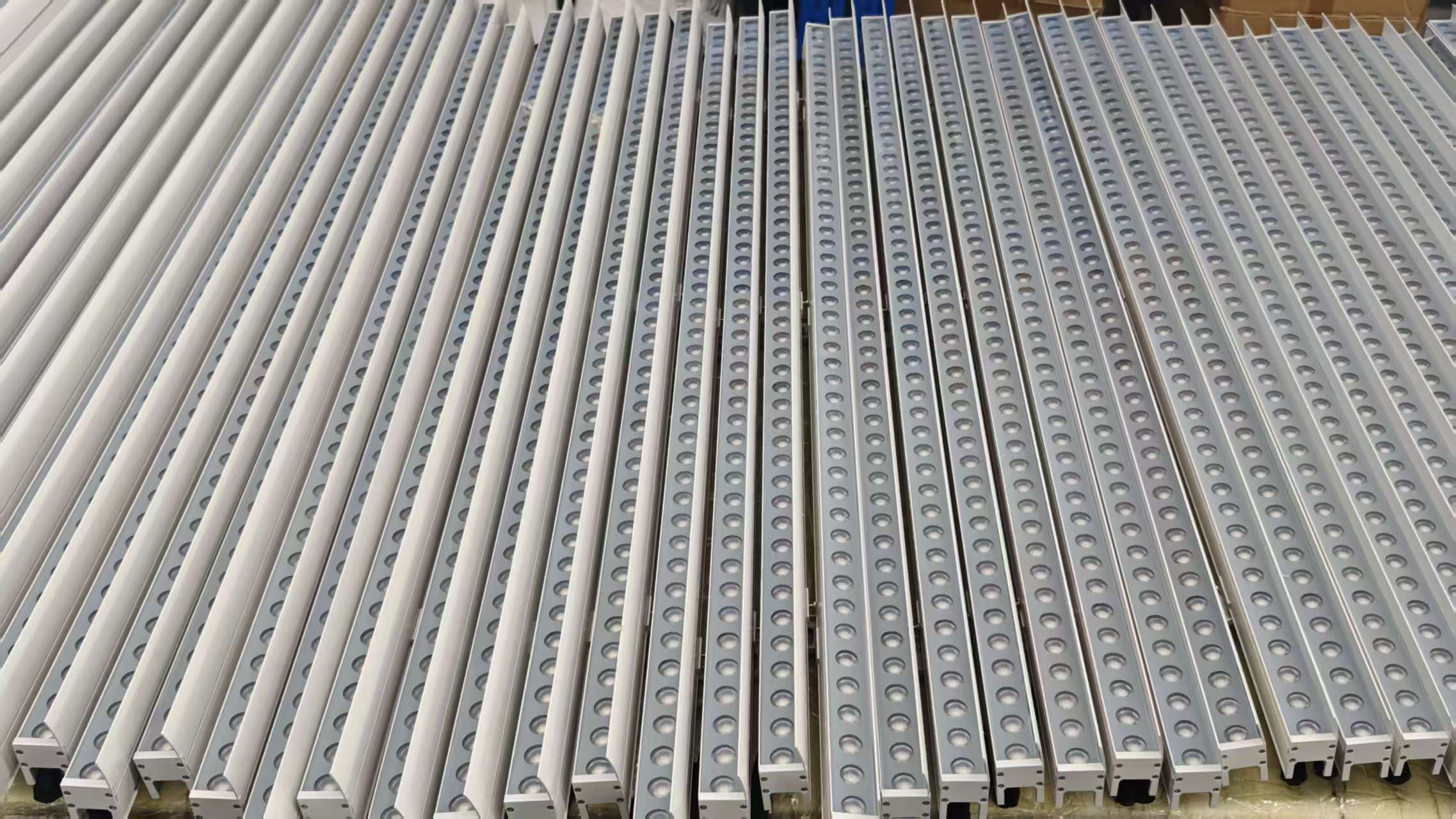
Not every project needs color, and not every color fixture yields accurate whites. RGB fixtures without a white channel often render pastels poorly; RGBW includes a dedicated white LED so you can achieve clean architectural white plus saturated colors when needed. For public plazas or event-driven facades where versatility is required, RGBW controlled via DMX512 or Art-Net is the sensible approach.
Form factor matters. Linear modules create the continuous, even wash you want across bridges, podiums or long elevations. Compact narrow-beam washers are precision tools for cornices, window reveals or sculptural elements. Let the architecture determine the fixture family—not the other way around.
3. What the Numbers Look Like—Practical Benchmarks
When defining procurement criteria and mock-up acceptance standards, protection level and photometric verification should be the first considerations. For exterior facades exposed to rain, IP65 should be treated as the baseline requirement, while IP66 is recommended for coastal environments or locations subject to water jet cleaning, in accordance with IEC 60529. Beyond ingress protection, reliable projects also require documented photometric and lifetime verification. This means requesting LM-79 test reports for luminaire photometry, along with LM-80 and TM-21 data for the LED package, to validate claims related to lumen maintenance and service life.
Color fidelity is another critical factor in architectural facade lighting. For general exterior illumination, a target Color Rendering Index (CRI) of ≥80 is typically sufficient. In applications where accurate material color representation is essential, the requirement should be raised to CRI ≥90. To describe color performance more precisely, CRI should be supplemented with IES TM-30 metrics (TM-30-18), which provide deeper insight into color rendition quality.
Optical and thermal parameters must be matched to installation geometry and long-term maintenance expectations. Beam angles should be selected according to mounting distance and surface finish: narrow beams (10°–20°) are suitable for texture grazing, medium beams (30°–60°) for standard facade washing, and very wide beams (>90°) for low mounting heights or broad surfaces. Where luminaires are offset from the facade, asymmetric optics should be specified to maintain uniform illumination. Finally, procurement documents should require verifiable thermal performance data and clearly defined warranty terms, ensuring long-term system reliability is contractually protected rather than assumed.
4. Measured Example — Practical Results and Lessons
On a hospitality facade retrofit in Northern Europe (commissioning: winter 2023) we installed 120 linear RGBW wall washers (36 W each), mounted at 6.0 m from the facade with 1.2 m spacing and commissioned a 1 m test grid. Post-commissioning results were strong:
Average illuminance: average illuminance on the facade plane measured ~210 lux
Uniformity (avg/min): an average/minimum uniformity ratio of 0.72 (min ≈152 lux, peaks ≈210+ lux)
Observed color shift after six months: <2 Δu′v′ with carefully matched LED bins and consistent current settings
The mock-up phase proved its value: we identified two simple, low-cost corrections before full rollout—small tilt adjustments on the lowest row to eliminate sidewalk glare, and replacing corner fixtures with asymmetric lenses to remove edge hot spots. Implementing those changes eliminated the majority of user complaints after deployment and significantly improved perceived quality.
5.Corrosion Protection is Structural, not Cosmetic
Clients tend to think of coating as a finish. In coastal or industrial environments, an inadequate coating is the start of failure. Specify powder-coated housings with corrosion protection aligned to ISO 12944 corrosivity categories (select C3–C5M as appropriate). Combine electrostatic powder coating with A4 stainless fasteners and sealed cable glands. In one coastal installation we tracked, properly coated units retained factory finish after five winters; cheaper painted fixtures showed blistering within 18 months.
6.Commissioning and Maintenance—Short, Practical List
Perform a short commissioning paragraph first: before committing to full procurement, run a 2–4 m on-site mock-up on the actual facade to verify spacing, tilt, beam overlap and glare control; make final purchase conditional on documented meter readings and mock-up approval. Require suppliers to submit LM-79 photometric reports and LM-80 + TM-21 LED life data in the tender so lumen maintenance and lifetime claims can be independently verified. Specify driver accessibility in the design (remote or serviceable internal location) and require delivery of a spare-parts kit (drivers, lenses, gaskets) with defined replacement procedures and response times.
For ongoing maintenance, keep a simple but complete maintenance log that records lens-cleaning cadence, driver inspections, repairs and corrective actions. Recommend a cleaning cadence of quarterly in polluted or coastal urban sites and semi-annual in low-pollution areas, and schedule color and photometric checks (lux/uniformity) after commissioning, at six months and then annually. When using RGB/RGBW systems, include periodic Δu′v′ checks against a reference tile to track color shift. Finally, document acceptance criteria (target lux, uniformity ratio, Tc limits, allowable glare) and require as-built photometric reports and commissioning records for final sign-off.

Conclusion
Good facade lighting is the product of disciplined choices: durable materials, a verified thermal strategy, the right optics for the surface, and verification through mock-ups and LM-79/LM-80 data. Skipping any of those steps turns a spec into a gamble—one that usually pays out as poor uniformity, premature color shift, and avoidable maintenance costs. Treat the luminaire as a system (PCB → TIM → housing → driver → control) and require verifiable test data and on-site mock-up sign-off before full procurement.
If you’re preparing a tender or evaluating supplier quotes, convert these principles into concrete acceptance criteria: specified IP and coating class, LM-79/LM-80/TM-21 deliverables, Tc/thermal test results at defined ambient, mock-up meter readings, and warranty language that covers drivers and ingress seals. Those requirements protect both the design intent and the owner’s long-term budget.
About LNJAMI
LNJAMI is a professional manufacturer and solution provider focused on architectural and outdoor lighting, founded in 2008 and headquartered in Shenzhen, China. With long-term experience in facade, bridge and landscape lighting projects, LNJAMI designs and supplies LED wall washers, linear luminaires, floodlights and RGB/RGBW control-ready systems for demanding outdoor environments.
Rather than offering standardized fixtures, LNJAMI emphasizes project-specific engineering, aligning optics, thermal management, materials and control strategies with each site’s architectural intent and environmental exposure. The company supports clients through mock-up testing, photometric documentation (LM-79, LM-80, TM-21), installation guidance and ongoing technical support, delivering lighting solutions that prioritize verified performance, durability and long-term visual consistency.
Frequently Asked Questions
Q1: Why do some wall-washer installations look patchy even though the spec looked fine on paper?
Patchiness usually results from multiple interacting errors: poor thermal design (raising LED junction temperature), inappropriate optics (wrong lens or material), incorrect mounting distance/tilt, too-tight spacing, and insufficient corrosion/water protection. Any single weak link can compound with others and reveal itself only after commissioning or months later.
Q2: What documentation should I require from suppliers to avoid getting poor-performing fixtures?
Require LM-79 photometric reports for the luminaire, LM-80 test reports for the LED package and TM-21 extrapolation for lifetime (L70) claims, LED binning data, and verified IP/coating test reports. Also request Tc/thermal test results at defined ambient conditions and clear drawings of driver placement and service access.
Q3: How do LM-79, LM-80 and TM-21 differ and why are they important?
LM-79 measures luminaire photometry (flux, distribution, power). LM-80 measures LED package lumen output over time under specific conditions. TM-21 uses LM-80 data to extrapolate lumen maintenance (e.g., L70). Together they validate photometric performance and expected life—without them you’re relying on vendor claims.
Q4: What ingress protection and coating levels should I specify for facade projects?
Treat IP65 as a baseline for rain-exposed facades; use IP66 for coastal sites or water-jet cleaning. For corrosion protection specify powder coating aligned to ISO 12944 corrosivity categories (choose C3–C5M as appropriate), plus A4 stainless fasteners and sealed cable glands.
Q5: How should I choose beam angles and spacing for different surfaces?
Match beam angle to mounting distance and surface finish: narrow (10°–20°) for texture grazing, medium (30°–60°) for standard facade washes, very wide (>90°) for low mounting heights or broad surfaces. Use asymmetric optics where luminaires are offset. Spacing rules depend on mounting height—validate with a mock-up.
Q6: What is a practical mock-up protocol?
Run a 2–4 m on-site mock-up on the actual facade and commission a 1 m test grid (or another suitable grid) to verify spacing, tilt, beam overlap, glare, and lux/uniformity. Make final procurement conditional on documented meter readings and mock-up sign-off.